Train Station 2: Tycoon Sim
- 4.3
- Rating
- 10.00M
- Installs
- Free
- Price
 Analysis by App-foxy
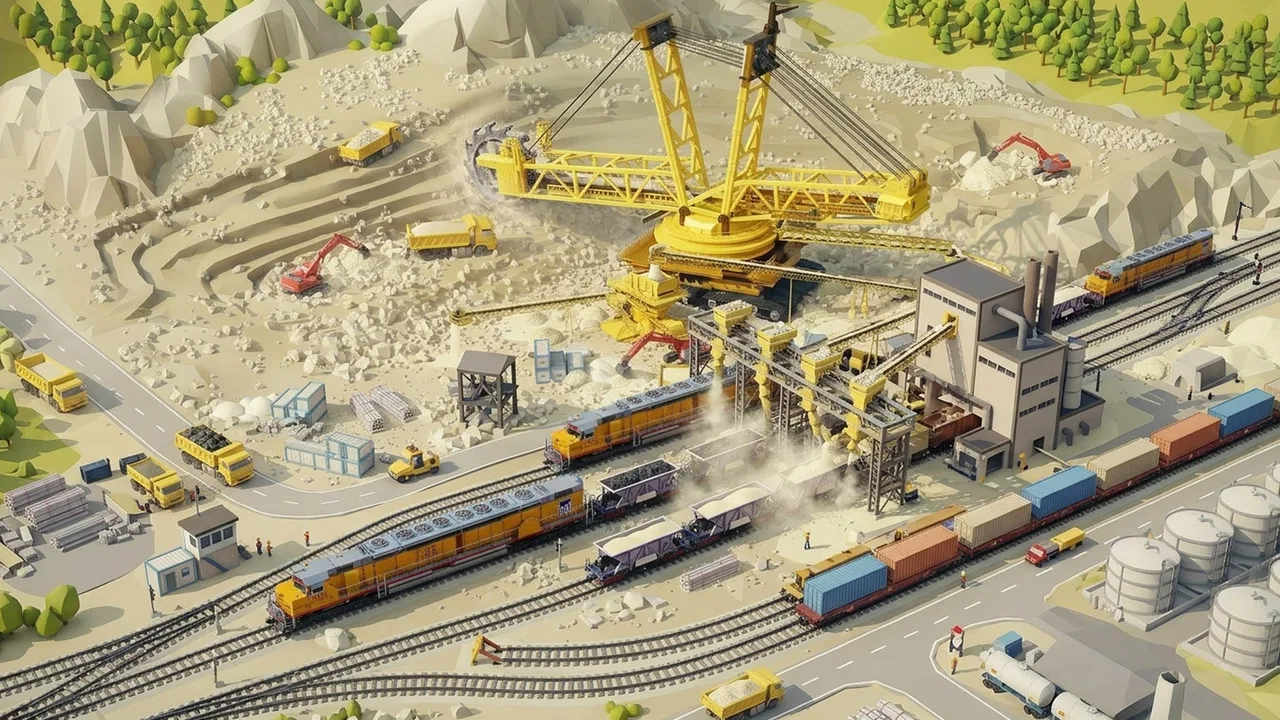
I approached Train Station 2: Tycoon Sim expecting a light train-themed strategy game, but it quickly showed more patience and planning than its cheerful presentation suggests. The basic idea is easy to understand: develop a railway operation, collect locomotives, complete jobs, and gradually expand your influence. The interesting part is deciding which job deserves your limited attention, which engine should be assigned, and when it is worth waiting rather than spending resources to speed things up.
That makes it a comfortable fit for short sessions. I can open it while waiting for an appointment, send trains out, collect finished work, and return later without feeling that I have missed a complicated real-time battle. At the same time, the strategy layer gives those small visits a purpose. It is not simply a decorative railway builder, and it is not a traditional train simulator focused on driving from the cab. It sits closer to a management game with a railway theme, built around progression, scheduling, collection, and resource decisions.
How the current version feels to play
PIXEL FEDERATION, s.r.o. has positioned the game as a free strategy title for people who enjoy building an operation over time. It has reached more than ten million installs and holds a 4.3 average from roughly 547 thousand ratings, which matches my impression that its main appeal is broad accessibility rather than a niche simulation audience. The content rating is Everyone, so the presentation is approachable for families and younger players, although the long-term progression and purchase prompts are still worth considering before handing it to a child.
You May Also Like

 Blood Strike: 2.5 Anniversary
Blood Strike’s Loadouts Turn Every Drop Into a Tactical Gamble
A close look at Blood Strike’s custom loadouts: how fast access to signature weapons reshapes its battle royale rhythm, rewards preparation, and narrows the gap between fights.

 Pandora - Music & Podcasts
Pandora’s Music Is Easy to Start, but Harder to Recover
Pandora’s strength is its low-effort path from a seed to a station. Its weak spot is how much confidence it asks you to place in connection, setup, and quiet recovery.

 8 Ball Pool
 Is Built on Rivalries, Rematches, and Routine
A close look at the rivalries, rematches, shared routines, and unanswered safety questions that turn a quick pool match into a persistent mobile community.

 Samsung Music
’s Quiet Strength Is Playing What You Already Own
Its reach comes less from spectacle than from dependable access to a personal library. That simplicity is both the app’s strongest retention engine and its ceiling.

 AccuWeather: Weather Radar
AccuWeather Review: A Quick, Clear Forecast for Everyday Decisions
For everyday plans, the best forecast is the one you can understand quickly. AccuWeather makes rain timing, radar, and local conditions easy to act on, with a few trade-offs.

 Hill Climb Racing
Why Hill Climb Racing Still Turns Crashes Into One More Run
A tiny car, a bumpy hill and one more upgrade: Hill Climb Racing keeps resurfacing because its simple chaos makes every near-miss feel personal.
More From Our News Desk



The central loop is straightforward. I look at available contracts, check what each one requires, assign suitable locomotives, and wait for the work to finish. Completing jobs provides the materials or progress needed to unlock further development. New areas and trains give the collection side a steady sense of movement, while the expanding network makes earlier decisions feel connected to later goals.
What I like is that the game does not demand constant concentration. A train can be working while I am doing something else, so the design respects the way mobile games are usually played. I do not need a long uninterrupted evening to make progress. A few minutes in the morning can be enough to collect results and start the next batch of work.
That convenience also creates the main tension. Timers and limited resources mean that progress is rarely instant. If I want to keep playing actively, I may run out of the most useful options and need to wait. The game therefore rewards a routine: start longer tasks before leaving, use shorter ones when I expect to return soon, and avoid spending valuable acceleration resources simply because a timer is mildly inconvenient.
Why the collection system matters more than decoration
The locomotives are not just visual rewards. Building a useful fleet changes how efficiently I can approach contracts, especially when several tasks compete for similar requirements. I found it more satisfying to think of the collection as a working toolbox rather than a gallery. A train that looks attractive but does not help with current demands may be less valuable than an ordinary-looking engine that fills an immediate operational gap.
This is one of the first non-obvious lessons I would give a new player: do not treat every available upgrade as equally urgent. The best choice depends on the jobs appearing around it. Holding resources for a locomotive or improvement that solves a recurring bottleneck can be smarter than upgrading the first option presented. That approach makes the progression feel less wasteful and reduces the frustration of discovering that a short-term purchase has not improved the way I actually play.
The visual style supports this relaxed management approach. It is colorful and readable, with enough movement to make the railway feel alive without turning the screen into a technical control panel. Players looking for authentic signaling, detailed track engineering, or realistic driving physics should adjust their expectations. The trains are the theme and the strategic pieces, not a full professional railway simulation.
What the version history means for players today
The game was released on April 11, 2019, and the current version is 4.40.0. That long span matters because this is not a small one-off puzzle with a fixed ending. It is an established, evolving mobile game whose present experience is shaped by years of ongoing development. I would approach it as a living progression game: useful for returning regularly, but also likely to feel more layered than its first few minutes suggest.
For a new player, the current version is best understood as an invitation to learn the economy gradually. Early tasks explain the rhythm, but they do not remove the need to plan. I would resist trying to optimize everything immediately. The opening stages are more enjoyable when used to identify which contracts are easy to maintain, which materials tend to slow progress, and how often I can realistically check the game during a normal day.
For someone who played earlier and is considering returning, the important point is that the game’s value is tied to its continuing structure rather than a single dramatic feature. A returning user should expect to re-learn the current pace and examine the available objectives before spending accumulated resources. Familiar habits may still help, but an older strategy should not automatically be treated as the best current routine.
I also appreciate that the version number gives the game a clear sense of present identity without changing what it is at heart. It remains a train-focused tycoon experience, not a sudden shift into a different genre. That consistency is helpful for existing users, while newcomers can understand the basic promise without needing to know the entire history of the project.
A practical routine that makes the timers less irritating
My preferred everyday routine is to begin with the longest useful assignments when I know I will be away from the phone. During a lunch break, I collect completed work, inspect which materials are becoming scarce, and choose shorter jobs that can finish before I return to other responsibilities. In the evening, I set up longer tasks again. This simple rhythm makes the waiting system feel intentional instead of passive.
Another useful habit is to keep one locomotive available for flexibility. Sending every train into a long assignment can leave me unable to respond to a more valuable short contract. That spare capacity is easy to overlook because immediate completion feels productive, but it often saves time later. I also try to group decisions: first review all current jobs, then assign trains, rather than sending the first available engine away and discovering a better use for it seconds afterward.
These choices reveal where the strategy actually lives. The game does not require complex calculations, yet it rewards awareness of timing, capacity, and opportunity cost. It is a good match for players who enjoy making small decisions repeatedly. It is less suitable for anyone who wants every action to produce an immediate visible result.
Free access, purchases, and the question of patience
The game is free to download, but it includes in-app purchases ranging from $0.49 to $599.99 per item. That is a significant spread, and it changes how I would recommend approaching the economy. I would begin with a personal rule: play the normal loop first, decide whether the waiting and resource limits are enjoyable, and only then consider spending. Buying something to remove a frustration is rarely a good test of whether the underlying game suits you.
In my experience, the strongest way to enjoy this type of design is to treat paid acceleration as optional rather than necessary. The game’s appeal comes from planning a sequence and watching it develop. If every delay is immediately skipped, some of that satisfaction disappears. On the other hand, a player with very limited time may value occasional convenience more than a completely free progression path. The right choice depends on whether you see the timers as part of the strategy or as an obstacle.
Parents should also consider the purchase range before allowing unsupervised play. The Everyone rating describes the tone and general accessibility, not a promise that the economy will suit every household. I would use the device’s purchase controls and agree on a spending rule in advance. That is sensible for any free-to-play game, but especially important here because the available item prices cover both small impulse purchases and very large ones.
Where it stands beside other strategy and train games
Compared with a conventional city-building game, this one is narrower and easier to enter. I am not managing every public service, residential zone, or city budget. The railway gives the whole experience a clear identity, and the contract loop keeps decisions focused. That makes it more approachable than a broad tycoon simulation, though it also means there is less freedom to design an entire society or economy.
Compared with a driving-focused train game, the difference is even clearer. I am not mainly controlling speed, braking, or route handling from a first-person viewpoint. I am managing the consequences around the trains: which locomotive works, what it carries, and how the operation grows. Someone who wants the feeling of physically driving a locomotive would be better served by a dedicated simulator. Someone who enjoys collecting engines and planning their use will find this more comfortable.
It also differs from fast competitive strategy games. There is no need to react to an opponent every second, and the pressure is mostly self-directed. That makes it suitable for relaxed play, commuting, and short breaks. The trade-off is that players who need constant tension, direct competition, or dramatic tactical reversals may find the pace too gentle.
Limits that become clearer after longer play
The biggest limitation is the reliance on waiting. At first, timers create a pleasant reason to return. Later, they can make the game feel repetitive if the available jobs do not match the amount of time I want to spend. The solution is not always better planning; sometimes the correct answer is simply to close the app and come back later. Players who dislike that rhythm should know early that this is part of the experience, not a minor inconvenience.
The other limitation is the risk of turning a collection game into a checklist. Unlocking locomotives and completing contracts can be satisfying, but the loop may feel narrow if I am not interested in gradual optimization. There is enough structure to support a long-term habit, yet not every player will want to repeat the same style of decision across many sessions.
I would also skip it if I wanted a game that could be completed in a weekend. Its appeal is cumulative. Progress makes more sense when spread across regular visits, and the free-to-play economy naturally encourages patience. Likewise, players who want deep railway engineering should look elsewhere; the accessible tycoon format deliberately leaves out the technical detail that defines a serious simulator.
Who will get the most from it
I would recommend it to someone who likes management games but wants a softer entry point than a dense desktop tycoon. It works well for players who enjoy collecting, checking progress, and making small improvements without needing to memorize complicated systems. It is also a good choice for a person who wants a game that can be played in short bursts and left alone without losing the thread.
It is particularly suitable for a daily routine. For example, I can start a few assignments before commuting, check the results during a break, and make a more deliberate set of choices at home. The game gives each visit a clear purpose, but it does not punish me for putting the phone away. That balance is one of its most practical strengths.
I would be more cautious recommending it to a player who becomes annoyed by locked progress, recurring timers, or prompts connected to optional spending. Even if the railway theme is appealing, those systems shape the entire experience. A free download does not mean a friction-free game, and the enjoyment depends heavily on accepting its slow-build structure.
What I would watch as an existing or returning player
When I revisit the game, I pay attention to whether new objectives give my established fleet meaningful work. A collection is only interesting when the trains continue to influence decisions. I also watch how often I am encouraged to spend resources for convenience, because that tells me whether the current rhythm supports patient play or increasingly favors acceleration.
New players should watch their own behavior as well. If I am checking the game naturally because I enjoy planning, that is a good sign. If I am opening it only to avoid feeling behind, the routine has stopped being relaxing. Setting a fixed number of check-ins can preserve the strategic part without allowing the timers to dictate the day.
After spending time with it, I see Train Station 2 as a polished, approachable railway management game rather than a complete simulation of railroading. Its strongest qualities are the clear collection goal, the manageable contract decisions, and the way progress fits around everyday interruptions. Its weakest points are the familiar free-to-play waiting structure and the possibility that repeated assignments will feel routine.
My final recommendation is simple: try it if you want a patient train tycoon game with light strategy and long-term collection. Start without spending, learn the timing loop, and keep a little flexibility in your locomotive assignments. If that rhythm feels satisfying, the current 4.40.0 version offers a substantial railway project to return to. If you need instant action, detailed driving controls, or a one-time purchase with no economy friction, this is probably not the right station for you.
FAQs for Train Station 2: Tycoon Sim
01What is Train Station 2: Tycoon Sim about?
Train Station 2: Tycoon Sim is a railway management and strategy game in which you build and expand a train empire. You collect different locomotives, send them to complete transport contracts, produce resources, and upgrade your station. The game combines city-building, time management, and collection mechanics, making it suitable for players who enjoy gradual progression and managing several tasks at once.
02Is Train Station 2: Tycoon Sim free to download and play?
Yes, Train Station 2: Tycoon Sim can be downloaded and played for free on supported Android and iOS devices. However, it includes optional in-app purchases for premium currency, special offers, faster production, and other advantages. You can make progress without spending money, although free players may need to wait longer for construction, resource production, and train upgrades.
03Does Train Station 2 require an internet connection?
An internet connection is generally required to play Train Station 2: Tycoon Sim properly because the game includes live events, cloud-based features, advertisements, and regularly updated content. Offline access may be limited or unavailable, and progress might not synchronize correctly without a connection. For the most reliable experience, play while connected to stable Wi-Fi or mobile data.
04Are there advertisements and in-app purchases in the game?
Yes, the game contains advertisements and optional in-app purchases. Watching selected ads can sometimes provide useful rewards, such as extra resources, reduced waiting times, or additional benefits. Purchases can accelerate progress and provide premium items, but they are not strictly necessary. Parents should review the device’s purchase settings if children will be playing the game.
05Is Train Station 2 suitable for casual players and children?
Train Station 2 is easy to understand and offers a relaxed visual style, so casual players can learn the basic controls quickly. Nevertheless, it includes timers, resource management, frequent objectives, advertisements, and optional purchases. Younger children may enjoy the trains, but parental supervision is recommended because of the monetization system and the possibility of accidental purchases.
Pros
- Easy-to-learn gameplay suitable for both casual and strategy players.
- Many train types and upgrades provide satisfying collection goals.
- Events and challenges add variety beyond the standard delivery missions.
- Bright visuals and polished animations make the railway world enjoyable.
- Works well in short sessions when you only have a few minutes to play.
Cons
- Energy limits can slow progress and encourage waiting between tasks.
- Some upgrades and trains require substantial time or premium currency.
- Frequent events may feel demanding for players who cannot play daily.
- Managing multiple production chains can become repetitive over time.
- Limited storage capacity can create frustrating resource-management bottlenecks.

Train Station 2: Tycoon Sim
Gallery